

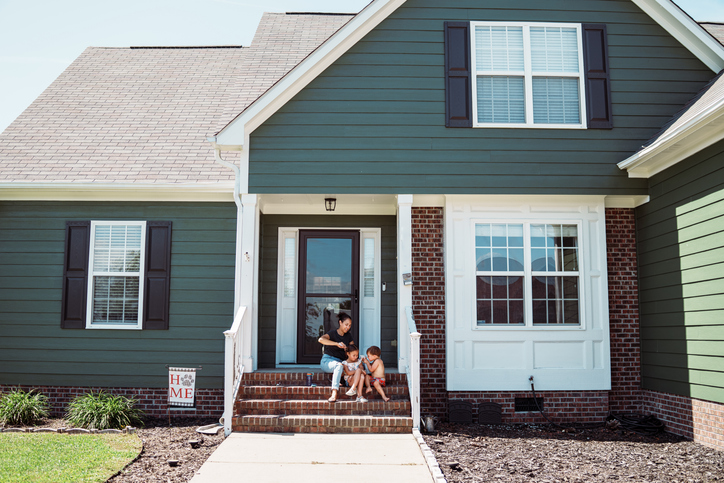
For many couples, the family home is the most valuable — and most emotionally charged — asset to address during a divorce. Whether you have lived there for years, raised children within its walls, or simply built a life around it, deciding what happens to the house can feel overwhelming. Understanding your options before you make any decisions can help you approach this process with greater clarity and confidence. This blog breaks down what you need to know about the family home and property division in California.
If you have questions about your home or any other asset in your divorce, reach out to Moreno Family Law Firm through our online contact form or call us at (408) 676-1814.
How California Law Treats the Family Home
California is a community property state. This means that, in general, any property acquired by either spouse during the marriage is considered equally owned by both. The family home is typically treated as community property — meaning both spouses have an equal ownership interest in it — unless it was owned by one spouse before the marriage or received as a gift or inheritance.
That said, the full picture can be more complicated. For example, if one spouse owned the home before the marriage but both spouses made mortgage payments during the marriage, the home may be partly separate property and partly community property. A family law attorney can help you sort through the details of your specific situation.
What Does "Equity" Mean and Why Does It Matter?
Before exploring your options, it helps to understand one key term: equity. Home equity is the difference between what your home is worth on the market and what you still owe on the mortgage. For example, if your home is worth $800,000 and you owe $300,000, your equity is $500,000.
Equity matters in a divorce because it represents real financial value that needs to be addressed during property division. The way you and your spouse divide that equity — or the home itself — has lasting financial consequences for both of you.
The Three Main Options for the Family Home
When it comes to the family home in a California divorce, most couples are faced with three primary paths. Each option has its own financial and personal considerations, and the right choice depends on your unique circumstances.
Option 1: Sell the Home and Split the Proceeds
Selling the home is often the most straightforward approach. Both spouses agree to list the home, sell it, and divide the proceeds according to each party's ownership share. In most California divorces involving community property, the split is 50/50.
This option provides a clean financial break and gives both spouses liquid assets — actual cash — to move forward independently. However, selling a home takes time, and market conditions can affect how much you ultimately walk away with. There are also costs associated with selling, such as real estate commissions and closing costs, which will reduce the final amount each spouse receives.
Option 2: One Spouse Buys Out the Other
If one spouse wants to keep the home — often because of children, community ties, or personal attachment — they may have the option to buy out the other spouse's share of the equity. In practical terms, this usually means refinancing the mortgage into one spouse's name alone and paying the other spouse their share of the equity in cash or through a trade-off with other marital assets.
This option allows one spouse to maintain stability and continuity, especially if children are involved. However, it requires the buying spouse to qualify for a new mortgage on their own, which may be difficult depending on their income and credit. It also means giving up other assets to offset the equity owed, which requires careful financial planning.
Option 3: Co-Own the Home Temporarily
In some cases, particularly when children are involved, divorcing spouses choose to continue co-owning the home for a set period of time after the divorce is finalized. This arrangement is sometimes called a deferred sale, and it is most commonly used to allow minor children to remain in the home until they finish school or reach a certain age.
While this can be a child-centered and practical short-term solution, it comes with real challenges. You and your former spouse will need to agree on how to handle ongoing mortgage payments, property taxes, maintenance costs, and repairs. Clear legal agreements governing these responsibilities are essential to avoid conflict down the road.
Factors That Can Influence the Decision
Several factors beyond personal preference can shape which option makes the most sense for your family. These may include:
- Whether children are living in the home and how a move might affect their schooling, routines, and well-being
- Each spouse's financial ability to carry the mortgage, property taxes, and upkeep on a single income
- Whether one or both spouses made separate property contributions to the home, such as a down payment using pre-marital savings
- The current real estate market in the San Jose area and how it affects the home's value and saleability
- Tax implications, including capital gains considerations if the home has significantly increased in value
These factors can significantly affect which option is financially viable and which will serve your family's best interests. It is worth taking time to review them carefully before agreeing to any arrangement.
What Happens If You and Your Spouse Cannot Agree?
Disagreements over the family home are common, and they can stall an otherwise manageable divorce. If you and your spouse are unable to reach an agreement on your own, there are a few ways forward.
Mediation is one option. A neutral third party — the mediator — helps both spouses communicate and work toward a voluntary agreement. Mediation is generally faster and less costly than going to court, and it keeps decision-making in your hands rather than a judge's.
If mediation does not work or is not appropriate in your situation, a judge can make the decision for you. The court has the authority to order the sale of the home, award it to one spouse, or establish a deferred sale arrangement. While court intervention is sometimes necessary, having a knowledgeable family law attorney on your side can help ensure your position is clearly and effectively presented.
Steps to Take When Preparing for Decisions About the Home
If you are in the early stages of a divorce or considering filing, getting organized early can make the property division process smoother and less stressful. Here are some practical steps to consider:
- Gather documentation related to the home, including the deed, mortgage statements, and records of any major improvements or repairs you have paid for
- Note when the home was purchased, who contributed to the down payment, and where those funds came from
- Obtain a professional appraisal or a comparative market analysis from a local real estate professional to understand the current value of the home
- Review your household budget to honestly assess what you can afford on your own if you plan to keep the property
- Consult with a San Jose divorce attorney before agreeing to anything in writing regarding the home
Taking these steps early gives you a clearer picture of your financial situation and helps your attorney advocate more effectively on your behalf.
Talk to a San Jose Divorce Attorney at Moreno Family Law Firm About Your Home and Property Division
The family home carries both financial weight and deep personal meaning. Making the right decision about what to do with it during a divorce requires clear information, careful planning, and the right legal guidance by your side. At Moreno Family Law Firm, we take the time to understand your situation and help you evaluate your options with a clear head — so you can protect your future without losing sight of what matters most.
If you are facing questions about property division or any aspect of divorce in San Jose, we are here to help. Contact us today through our online contact form or give us a call at (408) 676-1814 to schedule a consultation.